Please click here if you would like to read the PDF version
﹏﹏﹏﹏﹏﹏﹏﹏﹏﹏
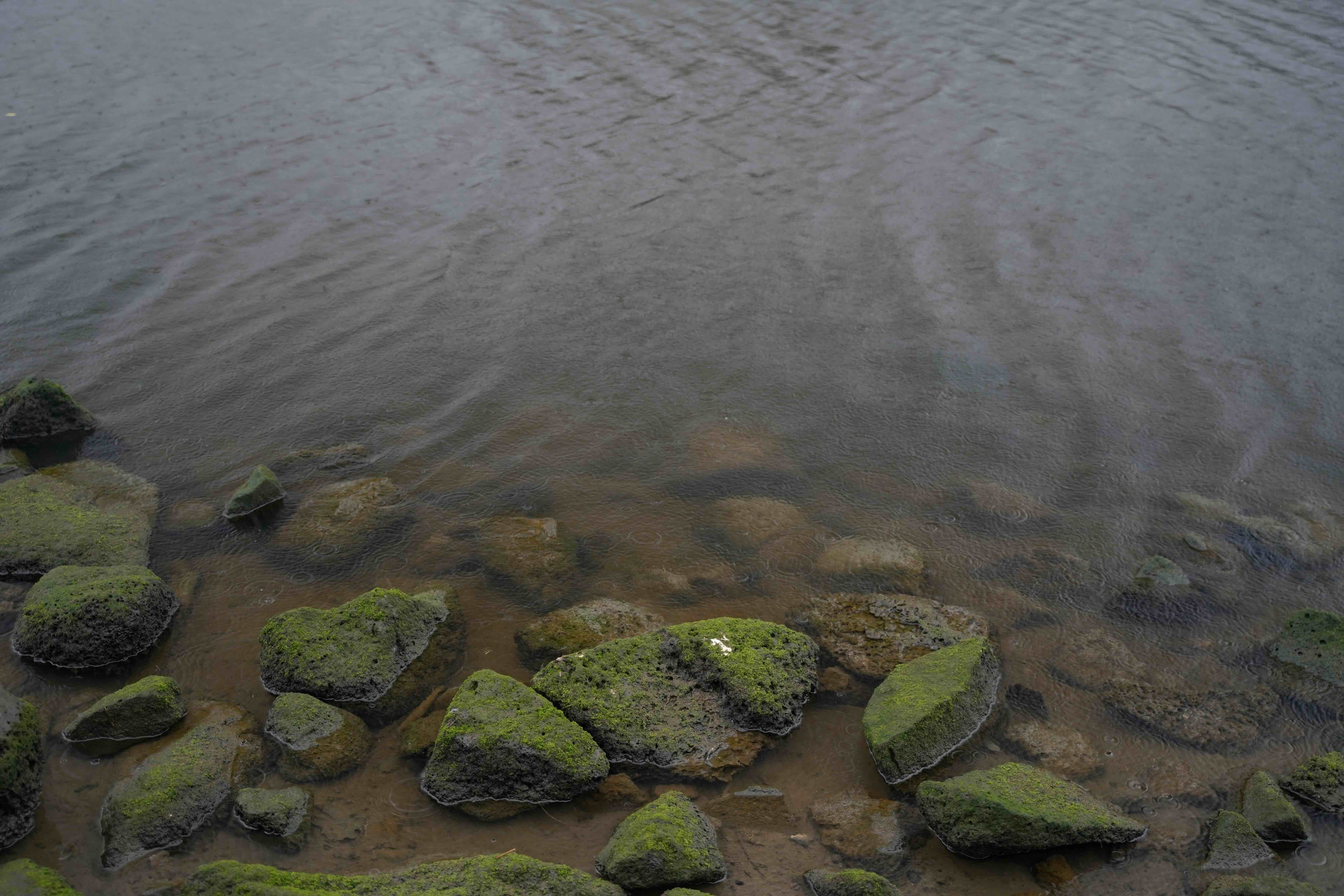
This offering begins in the middle. It begins in the manoeuvres we make, and paths we take, to make sensible the sedimentations of a history still present in microbial flickers and infrastructural incisions. Here—here—grounds of water, grounds of mud, grounds of collective and congealed lives subsist in the background hums of traffic, the filtering desires of bivalves, the thickened scents of bodies, and the passing of trace metals from one to another. We are together in our pores, in our tastebuds, in our vibrations felt or heard. We are together in a moment that reiterates another, a moment of grounded waters and waters grounded, where the particulations of today are re-aggregated by the temporal depositions of lakes filled, swamps drained, creeks moved.
As Bridget Crone writes: ‘If turbidity might describe smoke, polluted water and other fluids with suspended matter, then it certainly describes the conditions that envelop us and our fellow inhabitants in the present.’1 Turbidity disorientates us while bringing into focus the corrosive effects of material governance and grounds chartered into existence by violence and dispossession, by lands appropriated into capital and waters operationalised by industrialised routes of trade. It subsumes us in our sensorial compositions of a world in pluming presence, a world set against a backdrop of erosional slips and built confusions.
And to make sensible and then what? What scales of sensibility are required in the tributaried motions of waterways re-engineered and where might our sensing take us? How can the collective sensibilities enacted on a boat, on a shore, in our throats and palms and bellies, be mobilised through a collaborative space of commitment and responsibility to histories, to peoples, to toxicities and veins and flesh and grit, to the scalar pulsations of time and the flooded overspills of a wasting present? Where do the edges of our bodies leak into the limits of others? And what might be done in the micro-sensations of togethering?
These invitations ask that we dwell, here, today, with one another in the tiny, partial, and moving feelings of a place formed and re-formed by tidal pulls and seeping soils, to sense our way through a moment and to open ourselves to being collectively changed by it, in whatever shapes might emerge. Our bodies dis- and re-orientate in minute registers. To recall Sara Ahmed, ‘The starting point for orientation is the point from which the world unfolds: the “here” of the body and the “where” of its dwelling,’ however ‘depending on which way one turns, different worlds might… come into view,’ so that ‘becoming reorientated… involves the disorientation of encountering the world differently… is about the making of worlds.’2
And from this place, here and now, we might find that as we telescope in to the watery purrs of cells and succulents, we might then telescope out to a disorientated present, a temporal clouding, a collective moment changed and changing through the intensities of shared attentiveness to the grounds and waters we move on and in and through. We might be dis- and re-orientated towards a world in the making, one where the histories of this place are felt on our tongues and where the sensorial arrangements of bodies come to touch a present, sedimented in collective depositions of creative obligation and relation.
1. Bridget Crone, ‘Turbid Images and Bodies in the Field,’ in Fieldwork for Future Ecologies eds. Crone, B, Nightingale, S & Stanton, P. (Eindhoven: Onomatopee, 2023), 516.
2. Sara Ahmed, Queer Phenomenology: Orientations, Objects, Others, (Durham: Duke University Press, 2006), 189.
﹏﹏﹏﹏﹏﹏﹏﹏﹏﹏﹏﹏﹏
https://www.theresekeogh.com/about
﹏﹏﹏﹏﹏﹏﹏﹏﹏﹏﹏﹏﹏
Therese Keogh's responsive reading at Run Artist Run, Dec 2023
﹏﹏﹏﹏﹏﹏﹏﹏﹏﹏﹏﹏﹏